Wednesday, February 8, 2017

Oil Market 'Responding Positively' To Production Cut: OPEC


Doha: Qatar's energy minister, the current president of the Organization of the Petroleum Exporting Countries (OPEC ), said world oil markets were "responding positively" to output cuts implemented by OPEC and some non-OPEC producers.

"I think the market is responding positively and you can see the drop in supply," Mohammed Saleh al-Sada told reporters.

OPEC and non-OPEC producers led by Russia agreed in December to cut output by nearly 1.8 million barrels per day, initially for six months, starting from the beginning of this year.

Tuesday, February 7, 2017

Hindalco Surges On Strong Show From Novelis In December Quarter

hindalco-650_650x400_81470990215
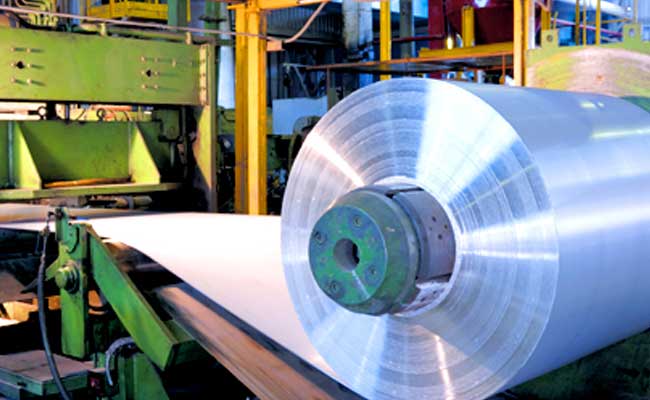
Hindalco shares surged over 3 per cent to an intraday high of Rs. 192.25 on Wednesday after its US subsidiary Novelis reported strong earnings for the October to December quarter. Novelis contributes more than half of Hindalco's operating profit. Atlanta-based Novelis said its adjusted net profit for the December quarter more than doubled to $67 million dollar compared to $32 million in the year ago quarter.

Novelis' strong performance was supported by a 7 per cent jump in its adjusted EBITDA or operating income to a record high of $255 million and 18 per cent reduction in interest expenses as a result of refinancing of two senior note issuances during the second quarter of fiscal 2017, the company said in a press release.

"Following our successful bond refinancing during the second quarter, we refinanced our $1.8 billion term loan with Asian banks in January," said Devinder Ahuja, senior vice president and chief financial officer at Novelis.

"Together, these bond and term loan transactions will result in an extended debt maturity profile and annual cash interest savings of approximately $80 million," he added.
Meanwhile, investors are also optimistic about Hindalco's December quarter earnings, to be announced on February 13 (Monday) on the back of strong show from Novelis and a revival of international metal prices.

As of 10.25 am, Hindalco shares traded 1.32 per cent higher at Rs. 188.35, compared to 0.03 per cent gain in the broader Nifty.

Earning Over Rs. 50 Lakh? How Marginal Relief Brings Down Your Tax Burden

Finance Minister Arun Jaitley in Budget 2017 cut the income tax rate on the lowest slab (Rs. 2.5 lakh to Rs. 5 lakh) to 5 per cent from 10 per cent. To offset the revenue loss, he imposed a surcharge of 10 per cent on those with taxable income between Rs. 50 lakh and Rs. 1 crore, thus bringing more taxpayers into the purview of surcharge. And the 15 per cent surcharge on income above Rs. 1 crore will continue as before. The total amount of tax foregone on account of these changes in tax rates is estimated at Rs. 15,500 crore. The new income tax rates will be applicable from April 1, 2017 or assessment year 2018-19 (AY2018-19).
What is Surcharge?

Surcharge is applicable on income tax if the income exceeds a specified limit. It is applicable on the basic tax (without inclusion of cess). Let us consider a person below 60 with taxable income of Rs. 75 lakh. What will he pay after the surcharge proposed in the Budget? His basic tax would come to Rs. 20.62 lakh. The 10 per cent surcharge comes to Rs. 2.06 lakh. Thus his total tax liability would be Rs. 22.68 lakh and after education cess it comes to about Rs. 23.37 lakh.

The concept of marginal relief is designed to provide some relief in levy of surcharge to a taxpayer where the total taxable income marginally exceeds Rs. 50 lakh or Rs. 1 crore.
How marginal relief helps lower tax burden?

Let us consider two scenarios:
1) where the surcharge is 10 per cent (income between Rs. 50 lakh and Rs. 1 crore) and 2) where surcharge is 15 per cent (income above Rs. 1 crore). According to tax rules, the surcharge of 10 per cent is not applicable where marginal relief comes into play even if taxable income is above Rs. 50 lakh. According to the concept of marginal relief, if the amount payable as surcharge exceeds the income above Rs. 50 lakh or Rs. 1 crore, the surcharge will be applicable at a marginal rate, which is 70 per cent of the incremental income above Rs. 50 lakh or Rs. 1 crore. (Incremental income above Rs. 50 lakh or Rs. 1 crore - 30 per cent of incremental income).

Scenario - 1 (where income exceeds Rs. 50 lakh marginally)
Suppose an individual's taxable income amounts to Rs. 51 lakh. Technically, the person has to pay a 10 per cent surcharge as income exceeds Rs. 50 lakh. But in this case, marginal relief comes into play and the surcharge he has to pay is not 10 per cent. How?

The person's income above Rs. 50 lakh is Rs. 1 lakh (Rs. 51 lakh - Rs. 50 lakh). On Rs. 51 lakh, the person is supposed to pay tax of Rs. 13.42 lakh and surcharge of (@10%) Rs. 1.34 lakh for (AY 2018-19). Since the surcharge (Rs. 1.34 lakh) is more than the income differential between (Rs. 51 lakh and Rs. 50 lakh), the surcharge of 10 per cent will not be applicable. Thus, the person with taxable income of Rs. 51 lakh will pay tax of Rs. 13.42 lakh and surcharge of Rs. 70,000 which comes to Rs. 14.12 lakh. Including cess (3%), it will come to Rs. 14.54 lakh. If the marginal relief had not been applicable, the total tax liability would have been Rs. 15.20 lakh.

Scenario - 2 (where income exceeds Rs. 1 crore marginally)
Suppose an individual's taxable income amounts to Rs. 1.02 crore. Technically, the person has to pay a 15 per cent surcharge as income exceeds Rs. 1 crore. But in this case, marginal relief comes into play and the surcharge of 15 per cent is not applicable. How?

The person's income above Rs. 1 crore is Rs. 2 lakh (Rs. 1.02 crore - Rs. 1 crore). On Rs. 1.02 crore, the person is supposed to pay tax of Rs. 28.72 lakh and surcharge of (@15%) of Rs. 4.31 lakh for (AY 2018-19). Since the surcharge (Rs. 4.31 lakh) is more than the incremental income of Rs. 2 lakh (Rs. 1.02 crore - Rs. 1 crore), then the 15 per cent surcharge will not be applicable. Instead, a lower surcharge of Rs. 1.4 lakh (70 per cent of incremental income of Rs. 2 lakh) will be applicable as marginal relief comes into play.
Thus the tax liability of the person with taxable income of Rs. 1.02 crore comes to Rs. 30.12 lakh (Rs. 28.72 lakh Rs. 1.4 lakh). Including cess, it would come to Rs. 31.02 lakh crore. Had marginal tax not come into play the total tax liability would have been Rs. 33.03 lakh and with cess Rs. 34.02 lakh.

Wednesday, February 1, 2017

Budget 2017: Lower Tax Rates To Encourage Income Disclosures

arun-jaitley-afp_650x400_51485941134
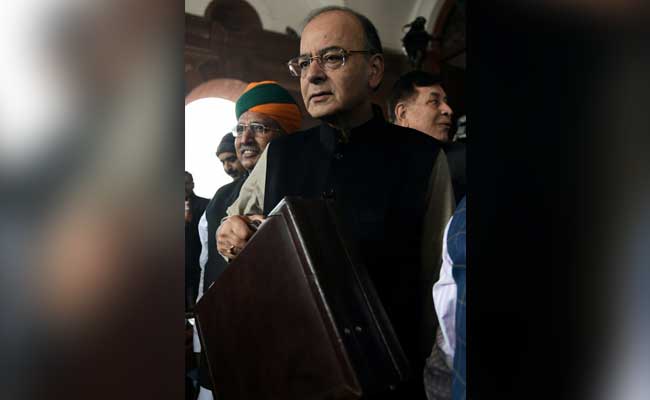
India will change some personal tax rates to encourage people to disclose their incomes as well as put more cash in the hands of consumers after Prime Minister Narendra Modi withdrew old high-denomination banknotes in a crackdown on unaccounted wealth.

The personal tax rate will be halved to 5 percent on incomes between 250,001 rupees ($3,697) and 500,000 rupees, Finance Minister Arun Jaitley said Wednesday in New Delhi, while announcing the budget for the year starting April 1. A surcharge of 10 percent will be levied on the personal tax paid on incomes between 5 million rupees and 10 million rupees, he said.

"While the government is trying to bring within tax-net more people who are evading taxes, the present burden of taxation is mainly on honest tax payers and salaried employees who are showing their income correctly," said Jaitley. "Also an argument is made if a nominal rate of taxation is kept for the lowest slab many more people will prefer to come within the tax net."

The step is part of efforts of the government to widen the tax net in a country of more than 1.2 billion people where about 53.8 million filed details of their personal incomes. The move will also likely put more disposable cash in the hands of people as growth in Asia's third-biggest economy slows.

Gross domestic product is predicted to expand 6.8 percent in the year through March, from 7.9 percent a year earlier, according to the median forecast of analysts surveyed by Bloomberg.

Indians with annual income up to 250,000 rupees for the current fiscal year are exempt from paying any personal tax. A 10 percent tax is levied on income from 250,001 rupees to 500,000 rupees; 20 percent for 500,001 rupees to 1 million rupees; and 30 percent for more than 1 million rupees. In addition, a 3 percent education levy is also charged on personal incomes. Individuals with an annual income exceeding 10 million rupees have to pay a surcharge of 15 percent on the personal tax paid.

Tuesday, January 31, 2017

Union Budget 2017: Sensex Cautious Amid High Hopes From Budget, PSU Banks In Focus

It is a big day for markets. Both Sensex and Nifty turned flat after opening marginally higher with shares of public sector banks advancing. Finance Minister Arun Jaitley is set to present Union Budget 2017 later in the day.  Markets' expectations are riding high given that it is the first Budget after demonetisation. From income tax to corporate tax cuts to measures to support the economy to more funds for public sector banks, expectations galore from Budget 2017. Stocks markets have already rallied to pre-denomination levels in anticipation of big announcements from the finance minister.  Analysts say that any disappoint could trigger a big correction in stock markets. 

Sajiv Dhawan of JV Capital Services says that feel good factor post demonetisation is still not there and Finance Minister Arun Jaitley should take this opportunity reignite the investor sentiment.  "I think the feel good factor is still not there across the board after demonetisation and this is an opportunity for the finance minister to reignite the sentiment by giving us some infrastructural push," he said. "He has to come out with some big reforms on tax cuts." Any Budget announcement on higher cash infusion in public sector banks and a roadmap for divestment would be hugely positive for stocks of state-run banks, say analysts. Income tax and home loan sops would be positive for consumer durable and real estate stocks. 

The index of public sector banks was up over 1 per cent, with SBI and Bank of Baroda up around 1-2 per cent. If there is any announcement on corporate tax cuts, it will be a big positive trigger for markets as the bottomline of companies would get an immediate boost, say analysts. 

However, if there is a change in capital gains tax regime or taxes on gains from stock market investments, it could spook markets, caution analysts. The Rail Budget has been merged with the Union Budget from this year. So a big hike in capital outlay for rail infrastructure will be a positive for railway-infrastructure related stocks. 

AK Prabhakar, head of research at IDBI Capital Markets & Securities, says markets have very high hopes from the upcoming Budget and it will be difficult for Mr Jaitley to fulfill them.  If there is a slight disappointment, markets could see a big correction, he added. If Nifty corrects below 8,300, then the correction would get deeper, he added.

At 9:19 am, the Sensex was up 40 points at 27,692 while Nifty edged higher to 8,574, up 13 points.

Budget Won't Be Moved Over MP's Death, Arun Jaitley Is Ready: 10 Points

New Delhi:  Lok Sabha Speaker Sumitra Mahajan will decide whether the Union Budget will be presented today, after a member of the house E Ahamed died last night. Sources, however say, the budget will be presented as scheduled, according to news agency ANI. Parliament is usually adjourned for a day after a sitting member dies. A decision is expected after 10 am. But the government, sources said, would like to go ahead with the Budget today and Finance Minister Arun Jaitley left home on schedule and is now meeting the President. The government is also talking to the opposition, whose leaders have suggested that the Budget should be put off for a day.

Here are 10 things to know:
  1. Stock markets opened higher on Wednesday anticipating big announcements from the Finance Minister to support the economy after November's notes ban. This is Mr Jaitley's fourth Budget and the first after demonetisation.
  2. The Railway Budget has been merged with the Union Budget, which has been advanced by almost a month for the first time. Opposition parties have alleged that the government made the change to be able to offer sops before elections in five states.
  3. To support higher government spending, economists expect Mr Jaitley to plan a fiscal deficit of 3.3-3.4 per cent of the gross domestic product (GDP) for 2017-18 which is higher than the earlier road map of 3 per cent. Rating agencies will frown at such a deviation.
  4. All eyes are on the tax section of Mr Jaitley's Budget. The income tax exemption limit for persons below 60 could be hiked from the Rs. 2.5 lakh currently, say economists. Mr Jaitley had in the Modi government's first Budget in 2014, raised the tax exemption limit to Rs.2.5 lakh from Rs. 2 lakh.
  5. With the overall savings rate declining, Mr Jaitley is expected to increase the deduction under Section 80C to Rs. 2 lakh from the current Rs.1.5 lakh. In last year's Budget, Mr Jaitley had allowed an additional deduction of Rs.50,000 under Section 80CCD (1) for investment in the National Pension Scheme or NPS.
  6. Economists expect the government to increase the exemption limit for interest payments under housing loans to Rs. 2.5 lakhs for existing home loan buyers from the current Rs. 2 lakh. This will benefit the real estate sector, which has been hit hard by demonetisation.
  7. Mr Jaitley is also expected to cut corporate tax rate by 1 percentage point to 29 per cent. The finance minister had in his second Budget speech in February 2015 announced reducing the corporate tax rate from 30 per cent to 25 per cent over a period of time. With the goods and services tax (GST) set to be rolled out from July, Mr Jaitley is not expected to tinker much with excise duties. However, he could raise the service tax rate from the current 15 per cent to align with the higher GST rate.
  8. Though the currency in circulation has largely normalised, the impact from demonetisation is likely to linger over the next few months, says global financial powerhouse Morgan Stanley. This will make revenue and tax projections a tough task, say economists.
  9. The Economic Survey has projected a growth rate of 6.75 per cent to 7.5 per cent for the next year (2017-18) but said that demonetisation is a risk for its growth projection. The Survey sees India's GDP growing between 6.5 per cent and 6.75 per cent in the current fiscal year.
  10. With elections in five states this month and the impact of demonetisation, some analysts are    worried that the government may turn towards less productive forms of spending, like subsidies. However, Morgan Stanley expects the government to stick to a fiscal policy stance that will remain supportive of promoting productive spending. "The government policies over the last 2.5 years have shown policymakers' commitment to promoting productivity-enhancing reforms," it said.

India's GDP To Grow At 6.75-7.5% Next Year, Projects Economic Survey

India's economy is expected to grow by between 6.75 per cent and 7.5 per cent in the coming fiscal year (2017-18), according to the Economic Survey, which was tabled in Parliament today. Indian economy is expected to slow down significantly in this current fiscal (2016-17) in the wake of demonetisation. The International Monetary Fund (IMF) has already downgraded its growth projection for this fiscal year, down to 6.6 per cent from 7.6 per cent forecast earlier.

The Indian economy expanded at 7.6 per cent in 2015-16 and at 7.2 per cent in 2014-15.
Prior to that, India's GDP grew at 6.9 per cent in 2013-14 and 5.1 per cent in 2012-13. 
At the lower band of Economic Survey's projection, if the economy grows at 6.75 per cent in 2017-18, it would be the lowest growth in five years.

A flagship annual document of the Ministry of Finance, the Economic Survey reviews the developments in the Indian economy over the previous 12 months, summarises the performance on major development programmes, and highlights the policy initiatives of the government. The Economic Survey also highlights prospects of the economy in the short to medium term.
 
The IMF has also cut India's growth rate for fiscal year (2017-18) to 7.2 per cent as against its previous forecast of 7.6 per cent.

Monday, January 30, 2017

Tech Mahindra Beats Estimates In Q3. Should You Buy?

Shares of IT outsourcer Tech Mahindra fell as much as 1.34 per cent on Tuesday, despite reporting better-than-estimated earnings for the December quarter.

Tech Mahindra's revenue grew 5.4 per cent sequentially to Rs. 7,558 crore compared to Rs.7,167 crore in the September quarter and its net profit surged 33 per cent sequentially to Rs.856 crore.

Analysts polled by NDTV Profit had estimated its net profit at Rs. 725 crore on revenues of Rs.7,360 crore. 


Its dollar revenue, which is widely tracked by analysts, grew 4.1 per cent sequentially to $1,161 million compared to NDTV Profit's analyst estimate of $1,090 million dollar. 

Tech Mahindra also reported improvement in its profitability. Its EBITDA margin or operating margin improved 80 basis points to 15.7 per cent against estimates of 15.6 per cent by NDTV Profit. 

However, Tech Mahindra's revenue beat was mainly driven by revenues from "Rest of World", whose contribution to its total revenue grew from 21.9 per cent in Q2 to 23.2 per cent. Revenue contribution from US, which is its biggest market and contributes nearly half of its total revenue, declined to 47.8 per cent compared to 48.9 per cent in Q2. 

According to domestic brokerage Nirmal Bang, Tech Mahindra is losing its market shares in communication vertical to its peers, which is a matter of concern. 

"The TTM (trailing twelve months) results of its (Tech Mahindra) large peers have shown relatively strong growth in communications vertical (TCS/Infosys/HCLT growing YoY by 8%/23%/13%, respectively) versus a decline shown by TML, indicating reasonably strong demand conditions and incremental market share shifting away," Nirmal Bang said in a note. 

The brokerage has a "sell" rating on the stock with a target price of Rs. 383, indicating a downside potential of 19 per cent from Monday's closing price. 

"Our target P/E multiple (10.1x) is at a 30% discount to the target multiples of TCS/Infosys and reflects TML's structural weaknesses because of its less diversified revenue mix, higher client concentration, lower margins and lower trending RoIC(return on capital employed)," the brokerage said. 

Meanwhile, overall weakness in the IT sector post US President Donald Trump's immigration curbs on seven countries has also hit investor sentiments. The IT sub-index of NSE, Nifty IT was down 1.27 per cent. 

As of 11.37 a.m., Tech Mahindra shares were down 0.51 per cent at Rs. 469.20. In comparison, the broader Nifty was 0.68 per cent lower at 8,574.45.

Piramal To Acquire Drugs From UK's Mallinckrodt For Rs. 1,162 Crore

New Delhi: Piramal Enterprises today said it will acquire a portfolio of intrathecal spasticity and pain management drugs from UK-based Mallinckrodt for $171 million (around Rs. 1,162 crore) in an all cash deal.

The company's UK-based wholly-owned subsidiary Piramal Critical Care has entered into an agreement with Mallinckrodt for acquiring the drugs and may also pay an additional $32 million depending on financial performance of the acquired assets over the next three years.

The acquired portfolio includes Gablofen (baclofen), a severe spasticity management product, which is currently marketed in the US and two pain management products, which are currently under development. 


"We continue to invest in the growth of our pharmaceutical businesses. This would be our 7th pharma acquisition in the last two years, taking our investment for inorganic growth to Rs.3,000 crore across our pharmaceutical businesses," Piramal Enterprises Ltd Chairman Ajay Piramal said in a statement. 

All these acquisitions are expected to be value accretive and will improve the company's pharmaceutical segment's growth, he added. 

"This transaction is a step further in our strategy to make investments, in both internal developments and acquisitions, to expand our presence in the global generic hospital drug market, which is greater than $20 billion in size," Pirmal said. 

Through this strategy, the company's focus continues to be the creation of long-term value for shareholders, he added. Completion of the transaction is subject to HSR review in the US and certain other conditions, the Mumbai-based firm said. 

"This acquisition provides Piramal a leadership position within the intrathecal spasticity segment and the opportunity to access the intrathecal pain management market, which is complementary to our critical care focus, and leverage our current operations and capabilities, especially in the US," Piramal Critical Care CEO Peter DeYoung said. 

These acquisitions add branded products that are in attractive niches with barriers to entry and limited competition, he added. "Along with our inhalation anesthesia products, we are building an exciting portfolio to offer our customers and a substantially more diversified revenue base," DeYoung said. 

Piramal Enterprises Ltd (PEL) is the flagship company of Piramal Group and has a presence in the healthcare and financial services verticals. Piramal shares were trading at Rs. 1,712.25 apiece on the BSE, down 0.49 per cent from previous close.

Sunday, January 29, 2017

TCS, Wipro, HCL Tech Shares Fall Over Trump Administration's Policy Fears

Shares of Indian outsourcers struggled today amid concern over the Trump administration's clampdown on immigration. The US is the key export market for Indian IT sector, accounting for around 60 per cent of revenues. The BSE IT index was down 0.41 per cent in noon trade as compared to an overall flat Mumbai market. Wipro, HCL Tech and TCS were down over 1 per cent. US President Donald Trump last week ordered a temporary ban on travelers from seven countries and a 120-day halt to refugee resettlement. The action triggered a global backlash as well as concern from global tech giants such as Google, Apple and Microsoft.

"Although this should not affect Indian IT companies immediately, it points to the fact that President Trump may walk the talk," wrote independent market analyst Ambareesh Baliga in a blog post.
The Indian IT industry is closely watching the Trump administration's policy over outsourcing and H-1B visa programme. Indian outsourcers employ a large number of tech workers on H-1B visas to work on projects in the US. 

The $150 billion India IT industry is particularly watching the proposed legislative changes in H-1B visa regime. A bill proposes restrictions from hiring H-1B employees if companies employ more than 50 people, and more than 50 per cent of the employees are H-1B and L1 visa holders. Another bill, among other things, proposes to increase the minimum salary of H-1B visa holders to $100,000 per annum (from $60,000 per year currently).

Hiring more workers in the US could significantly raise costs for Indian tech firms, analysts say.
The Indian IT industry is already battling slowing growth amid big changes in the technological landscape (like automation and artificial intelligence) and global headwinds like Brexit.
Concerns over US policies have weighed on IT stocks, with the BSE IT index falling over 3 per cent in the past one year. In comparison, the broader Nifty50 index has gained over 5 per cent during the same period.

Oil Extends Declines On Rising US Output

Tokyo: Oil prices extended declines on Monday, dragged down by signs of growing output in the United States that could partly offset output cuts by OPEC and other producers.
Uncertainty over the outlook for U.S policy also broadly weighed on financial markets after President Donald Trump introduced immigration curbs that sparked criticism at home and abroad.
But oil trading was quiet with several Asian countries, including China, on holiday for the Lunar New Year.

London Brent crude for March delivery had dropped 28 cents to $55.24 a barrel by 0417 GMT, after settling down 72 cents on Friday. NYMEX crude for March delivery was down 27 cents at $52.90 a barrel.

The U.S. weekly oil and gas rig count from Baker Hughes showed that U.S. drillers added 15 oil rigs last week, bringing the total count to 566, the most since November 2015.
The Organization of the Petroleum Exporting Countries and other producers, including Russia, agreed to cut output by almost 1.8 million barrels per day (bpd) in the first half of 2017 to relieve a two-year supply overhang.

"We are in wait-and-see mode, I suspect at the moment. Oil has reached a fair value equilibrium level given the current supply and demand outlook," said Ric Spooner, chief market analyst at CMC Markets in Sydney.

"Until we get anything to really disrupt that, we may not see too much change," he said, adding the market may draw some comfort from official OPEC figures for January output.
Spooner said as with other financial markets, Trump's ban on entry to the U.S. for refugees and citizens from seven Muslim countries had contributed to a "risk-off" attitude.

U.S. oil production has been rising, with the International Energy Agency forecasting total U.S. output growth of 320,000 bpd in 2017 to an average of 12.8 million bpd.

"The rise in U.S. output should not be unexpected," ANZ bank said in a note. "However we expect the reductions being made by OPEC will far exceed any rise in the U.S. and quickly reduce the global inventory that has been built up over the past two years," it added.

Hedge funds and money managers boosted bullish wagers on U.S. crude oil to the highest level since mid-2014, Commodity Futures Trading Commission (CFTC) data showed on Friday, as agreed output cuts by the world's top producers began to eat into a global glut.

Wednesday, January 25, 2017

Maruti Suzuki Net Profit Surges 47% In December Quarter, Shares Rise

India's biggest carmaker Maruti Suzuki on Wednesday reported that its net profit in the December quarter rose 47.46 per cent as compared to its year-ago period. Maruti Suzuki's net profit came in at Rs. 1,744.5 crore on income of Rs. 19,791 crore, compared with profit of Rs.1,183 crore on income of Rs. 16,957 crore during the same period last year.

During the third quarter of current financial year, Maruti Suzuki sold a total of 387,251 vehicles, a growth of 3.5 per cent over the same period previous year. Out of the total vehicles sold, 30,748 units were exported to other countries.

Analysts expected it to post a profit of Rs. 1,747 crore, according to Thomson Reuters data. 
"Increase in share of the company's higher segment models, lower sales promotion and marketing expense, cost reduction efforts and higher non-operating income contributed to increase in profits. This was partially offset by the increase in commodity prices and adverse foreign exchange movement during the quarter," Maruti Suzuki in a statement. 

Post the results, Maruti Suzuki's share traded 1.17 per cent higher at Rs. 5,806, outperforming the Nifty which was up 0.84 per cent.

SREI Infra Finance's Rs 707 Crore NCD To Offer 9.25% Interest

New Delhi: SREI Infrastructure Finance said it plans to raise up to Rs 706.63 crore through a public
issue of secured redeemable non-convertible debentures (NCDs). "SREI is proposing a public issue of secured redeemable non-convertible debentures (NCDs) of face value of Rs 1,000 each, aggregating up to Rs 200 crore, with an option to retain oversubscription up to the residual shelf limit of Rs 706.63 crore," SREI Infrastructure Finance said in a BSE filing.

The issue will open on January 30 and close on February 23. The highest coupon rate is 9.30 per cent for investors of all categories for a tenure of 5 years.

For all categories of investors with a tenure of 3 years, the rate is 9.25 per cent, and for 400 days, the coupon is 8.50 per cent per annum. The NCDs are proposed to be listed on NSE and BSE. 

Railway Union Seeks Tax Exemption Limit Be Raised To 6 Lakh In Budget

railway-generic_650x400_51483086244New Delhi: A railways employees union has demanded that the Income Tax exemption limit be raised to Rs 6 lakh in the Union budget and also exemption of transport allowance from the purview of I-T.

In a letter to Union Finance Minister Arun Jaitley, the National Federation of Indian Railwaymen (NFIR) has sought that the Income Tax exemption limit to be raised to Rs 6 lakh and Rs 7.5 lakh for senior citizens.

In rail sector, it has sought allocation of additional funds for augmenting Railway Training Institutes and Railway Community Halls and recreation clubs.
Separate Rest Rooms for women railway employees at different locations be sanctioned to enable them to stay when they visit on railway duties, NFIR has demanded.

Besides, additional road mobile medical vans for providing medical treatment to the railway employees and their families living at remote places.
The Railway Budget has been merged with the General Budget and will be presented by Jaitley in Parliament on February 1.

Monday, January 23, 2017

Gold Steady As Unease With Trump Policy Weighs On Dollar

Gold prices were steady on Tuesday as the dollar remained under pressure on signs that United States President Donald Trump would adopt a protectionist stance on trade.

Spot gold was mostly unchanged at $1,217.42 per ounce by 0337 GMT, after hitting their strongest since Nov. 22 at $1,219.59 earlier in the session. U.S. gold futures inched up 0.2 percent, to $1,218.

Trump formally withdrew the U.S. from the Trans-Pacific Partnership trade deal on Monday and told U.S. manufacturing executives he would impose a hefty border tax on firms that import products after moving American factories overseas.

"We are looking at gold hitting $1,250 within weeks. The rationale is very simple. The market was in honeymoon with Trump. With him in power now, the reality starts to bite," said Dominic Schnider of UBS Wealth Management in Hong Kong.

"The market starts to realise the euphoria on how he starts to accelerate the growth and is disappointed. Maybe his policies are inflationary rather than growth supportive."

Trump's nominee for Treasury Secretary Steven said that an excessively strong dollar was negative in the short term, according to a report by Bloomberg on Monday. That put additional pressure on the dollar.

The dollar index, which measures the greenback against a basket of currencies, fell for a third day by 0.2 percent to 99.930.

Trump's campaign calls for tax cuts and more infrastructure spending have boosted U.S. shares and the dollar, as well as driving a selloff in U.S. Treasury bills, but his protectionist statements and a flurry of off-the-cuff Tweets have kept many investors from adding to risky positions.

"Regardless of Trump, the main story for gold is negative interest rates in the U.S. We are not expecting the Fed to raise rates in March and it's just going to be two hikes and that's roughly priced in to the market," Schnider said.

Spot gold looks exhausted and may again fail to break a strong resistance at $1,219 per ounce before retracing towards a support at $1,196, according to Reuters technical analyst Wang Tao.
Among other precious metals, silver was flat at $17.19 per ounce while platinum gained 0.5 percent, to $983.35.

Palladium dropped by 0.6 percent to $771.80 an ounce, after hitting $795.60, its highest since May 2015, in the previous session.

Sensex Up Over 100 Points, Nifty Above 8,400; HCL Tech Falls Post Q3

Sensex and Nifty edged higher in opening deals on Tuesday tracking gains in banking, oil & gas, power, capital goods and metal stocks amid subdued trading in other Asian markets. MSCI's broadest index of Asia-Pacific shares outside Japan edged up 0.1 per cent but Tokyo's Nikkei slipped 0.3 per cent.

Among Asian share markets, Hong Kong's Hang Seng was up 0.32 per cent, China's Shanghai Composite jumped 0.1 per cent and South Korea's KOSPI was down 0.16 per Cent.
Back home, analysts say traders are cautious ahead of the Union Budget 2017-18 which will be announced by the government on February 1 and will keep a close eye on how the government spends the money on various social and infrastructure projects.

Meanwhile, BSE's initial public offer -- the first by a domestic stock exchange in India -- to raise up to Rs 1,243 crore received 50 per cent subscriptions on the first day of the 3-day bidding on Monday.
The IPO, which closes on January 25, received bids for 54,30,204 shares as against the total issue size of 1,07,99,039, data available with NSE till 1700 hours showed.The portion set aside for qualified institutional buyers (QIBs) was subscribed 17 per cent and that of non-institutional investors 12 per cent. The retail investor category got 86 per cent bids.

On Dalal Street, buying was visible across the sectors barring a few IT and FMCG shares. Banks, metal, oil & gas and capital goods stocks were among the leading gainers in the morning deals.
From the Nifty basket of shares, 41 were advancing while 10 were declining.
Yes Bank was the top Nifty gainer, up 2 per cent at Rs 1,410. Coal India, Power Grid, Bharat Petroleum, Bank of Baroda, HDFC, IndusInd Bank, Axis Bank and ACC were also among the gainers.

On the other hand, HCL Technologies was the top Nifty loser, the stock fell 2.2 per cent to Rs 838 after company announced third quarter earnings. The company's net profit rose 2.3 per cent to Rs 2,062 crore in the December quarter.

Hindutan Unilever which reported a jump of 7 per cent in its net profit post market hours on Monday also declined in trading as its December quarter earnings came in below analysts' estimates.
Bharti Airtel, Infosys, Asian Paints and Hero MotoCorp were also among the laggards.
The broader markets were in-line with the benchmark indices as the BSE mid-cap and small-cap indices jumped 0.45 per cent each.

HCL Tech Q3 Net Rises 2.3% To Rs. 2,062 Crore, Meets Estimates

HCL Technologies reported 2.3 per cent sequential rise in its net profit for the December quarter, meeting the Street's estimates. The Noida-based outsourcer reported a net profit ofRs. 2,062 crore compared to Rs. 2,016 crore in the September quarter. Its revenue increased 2.6 per cent to Rs. 11,814 crore compared to Rs. 11,519 crore sequentially.

The highly-tracked dollar revenue of HCL Tech grew 1.3 per cent sequentially to $1,745 million, meeting Street estimates.

Meanwhile, HCL Tech expects its FY2017 revenue to grow at the middle of its guidance of 10-12 per cent based on the December 31, 2016 exchange rates. Earlier the outsourcer had guided for a revenue growth of 12-14 per cent based on the average exchange rate for FY2016.

HCL Tech's operating margin or EBIT margin came in at 20 per cent in Q3. The outsourcer expects its FY2017 EBIT margin to remain in the range of 19.5-20.5 per cent. As of 9.25 a.m., HCL Tech shares traded 2.37 per cent lower at Rs. 836.95 apiece. It was the top loser in the Nifty50 index.

Oil Slips As US Drilling Recovery Offsets OPEC-Led Cuts

New York: Oil prices fell 1 percent on Monday as signs of a strong recovery in U.S. drilling largely overshadowed news that OPEC and non-OPEC producers were on track to meet output reduction goals.
Ministers representing members of the Organization of the Petroleum Exporting Countries and non-OPEC producers said at a meeting in Vienna on Sunday that of the almost 1.8 million barrels per day (bpd) they had agreed to remove from the market starting on Jan. 1, 1.5 million bpd had already been cut.

"Despite comments over the weekend at the OPEC compliance meeting that cuts in OPEC/non-OPEC production were ahead of schedule, a sharp rise in U.S. rig counts and talk of large increases in capital spending seem to be souring the bullish mood," said Phil Flynn, analyst at Chicago-based brokerage Price Futures Group.
U.S. drillers added the most rigs in nearly four years last week, data from energy services company Baker Hughes showed on Friday, extending an eight-month drilling recovery.
Brent crude settled down 26 cents, or 0.5 percent, at $55.23 a barrel. U.S. crude futures closed the session at $52.75 a barrel, down 0.9 percent, or 47 cents.

The front-month Brent crude spread, however, tightened to the narrowest discount, or contango, in more than four months amid signs of tightening supplies and firm Asian demand.
Prices pared some losses after Iraq's oil minister said it was too early to say whether the deal needed to be extended and that he expected oil prices to rise to $60-$65 per barrel.

The trend therefore remains bullish for oil until the charts say otherwise, he added.
U.S. oil production has risen by more than 6 percent since mid-2016, though it remains 7 percent below the 2015 peak. It is back to levels of late 2014, when strong U.S. crude output contributed to a crash in oil prices.
"There is a widely held view that prices should be higher because that is what Saudi Arabia is strongly pushing for through immediate supply cuts, but there is concern as to the speed and scale of the response of U.S. shale oil supply to higher prices," Standard Chartered said in a note.

"While we have argued that U.S. shale cannot increase fast enough to balance cuts in production elsewhere, we  think that market concerns on the potential U.S. response are still providing short-term resistance to prices heading closer to $60."

Markets in general were also rattled by early signals from U.S. President Donald Trump highlighting a protectionist stance on trade, putting investors on the defensive.

Trump told U.S. manufacturing executives he would impose a hefty border tax on firms that import products into the United States after moving American factories overseas. He also signed an executive order, formally withdrawing the United States from the Trans-Pacific Partnership trade deal.

Oil market speculators added to bullish bets last week, showing increased optimism about higher prices.
However, a record high gross long position among money managers in NYMEX crude oil futures and options leaves the market ripe for a correction, traders said.

Against RBI's Demand, Government Mulls Seperate Regulator For E-Payments

New Delhi: With digital transactions gaining traction, the government is mulling setting up of a separate regulator for enabling electronic payment system in the country as well as regulate transaction charges. While the Ratan Watal committee on digital payments suggested that the government makes regulation of payments independent from the function of central banking, sources said the RBI is not very keen on giving up the regulation on Payment systems.

Official sources said that RBI, as a banking regulator, frames policies to benefit banks and not enforcement of competition and innovation objectives in conduct of firms in the payment industry.

"So far, regulations are becoming bank focused. If there is a separate regulator, the focus would be on ease of transaction and rationalisation of cost. Hence, there is a case for setting up of an authority for enabling electronic payment system in India," an official source told PTI.

The Reserve Bank, in its representation before the Watal Committee, has stated that regulation of payments should be with the central bank because regulating money supply is an integral function of a central bank and includes maintaining the confidence in money as a means of exchange. Explaining the need for a separate regulator, the source said that electronic payment does not entail exchange of physical cash and it does not involve deposit taking or credit offtake or servicing of loans/deposits.

"Payments can happen without banking. Payment regulation is different from banking regulation. RBI is not agreeing to it," the source said, adding the proposed regulator should have majority of its membership from businesses having direct familiarity with the payment process, or allied businesses.

The Watal Committee, which submitted its report to Finance Minister Arun Jaitley last month, weighed two options on how best regulation of electronic payments can be made independent from the function of central banking. The committee considered creation of a new payments regulator, or making the current Board for Regulation and Supervision of Payment and Settlement Systems (BPSS) within RBI more independent.

Sources said that RBI, as a regulator, is focusing more on the interest of banks rather than creation of a financial ecosystem and even after coming up with consultation paper on fixing MDR charges in March 2016, it has not been able to fix the charges.

Panel To Relax 2017-18 Fiscal Deficit Target To 3-3.5%: Report

New Delhi: The government has barred cooperative banks from accepting deposits under the new tax amnesty scheme - Pradhan Mantri Garib Kalyan Yojana (PMGKY), a move that comes amidst the Income Tax Department uncovering anomalies post-demonetisation.After junking old Rs. 500 and Rs. 1,000 notes, the Centre had come up with an amnesty scheme for holders of unaccounted cash by asking them to pay 50 per cent tax and parking one-fourth of it in a no-interest bearing four-year deposit.

This deposit could be made with any banks. But now cooperative banks have been barred from accepting such deposits. The PMGKY scheme is open till March 31.
"Application for the deposit in the form of Bonds Ledger Account shall be received by any banking company, other than Co-operative Banks, to which the Banking Regulation Act, 1949, applies," the government said while amending the notification for Pradhan Mantri Garib Kalyan Yojana (PMGKY), 2016.

Under the scheme, holders of unaccounted cash willing to avail the offer will have to first pay the tax amount and then fill up a challan form provided by the bank for availing the four-year deposit scheme.

The authorised banks have to electronically furnish the details of deposit to the Revenue Department on the next working day to enable information verification of the deposit before accepting the declaration under the PMGKY.

Full confidentiality of the data would be ensured by the Reserve Bank of India and authorised banks.
The amendment to the notification comes after the I-T department spotted irregularities in deposits of cooperative banks following demonetisation.

The I-T department's investigation revealed that deposits in the books of certain cooperative banks were in excess of the physical holding of the now-defunct 500 and Rs. 1,000 currency notes.
Initially cooperative banks were allowed to take deposits of old currency notes and as per estimates, about Rs. 16,000 crore was deposited. But six days into demonetisation, the RBI barred these banks from exchanging old currency notes or accepting deposits.

'Reasonable' Valuation Makes BSE IPO Attractive, Say Analysts

The BSE is offering shares for public subscription through its initial public offer (IPO), which opened on Monday. BSE's Rs 1,243 crore IPO is priced in a narrow range of Rs 805-806. The IPO, from Asia's oldest and world's largest exchange by number of listed companies (5,963 companies), is open till Wednesday and can be subscribed in lot sizes of 18. Out of the total issue, 35 per cent is reserved for retail investors. BSE has already raised Rs 373 crore from anchor investors by allotting shares at Rs 806. Its shares will be listed on National Stock Exchange on February 3.
Here are 10 things to know before you decide to invest in the IPO:

1) BSE's IPO is purely an offer for sale. This means that it does not intend to raise any fresh capital from the issue. Through this IPO, BSE's investors like Deutsche Boerse, Singapore Exchange, State Bank of India, LIC etc. are selling around 28 per cent stake in the exchange.

2) Established in 1875, BSE is Asia's oldest and is world's tenth largest exchange according to market capitalisation.

3) In FY2016, BSE had 15 per cent market share in the equity cash market segment and 6 per cent share in the equity derivative segment. In interest rate derivatives and currency derivative derivatives, it had a market share of 17 per cent and 36 per cent respectively.

4) BSE has a diversified source of revenue: In FY2016, 39 per cent of its revenues came from securities services, 26 per cent came from services to corporates, 4 per cent came from data dissemination fees and remaining 31 per cent came from investments and deposits.

5) BSE's revenues have grown at a CAGR of 3.5 per cent during FY2012-16 to Rs 616 crore. In the first half of FY2017, the exchange already generated revenue of Rs 353 crore. Most of its incremental revenues in last fiscal and current fiscal has come from corporate services like listing fees, which accounts for 21 per cent of its overall revenue and has witnessed a CAGR of 20 per cent during FY2012-16.

6) BSE's net profit however has remained sideways in last three fiscal because of its falling profit margins. In FY2016 its net profit was at Rs 123 crore, down from Rs 130 crore in FY2015. In the first half of the present fiscal, BSE's net profit was Rs 105 crore. BSE's net profit margin has fallen from 32.1 per cent in FY2012 to 19.9 per cent in FY2016 and its operating margin (EBITDA) has dropped to 41.9 per cent in FY2016 from 59.3 per cent in FY2012.

7) However, analysts are positive on the future revenue growth prospects of BSE as equity investment as a percentage of total savings in India is 5 per cent, which is very low compared to other countries. (14 per cent in China, 15 per cent in Brazil, 20 per cent in Indonesia and 42 per cent in USA).

8) At Rs 806, the upper end of the IPO price band, BSE's shares are valued at 20.6 times its FY2017 annualised earnings per share, which is a "reasonable" valuation, says Angel Broking. In comparison, Multi Commodity Exchange shares are trading at 44 times its FY17 estimated earnings per share. Angel Broking has a "subscribe" rating on the issue. Other brokerages like ICICI Securities, Geojit BNP Paribas also have a "subscribe" rating on the issue.

9) BSE currently holds 54.2 per cent stake in Central Depository Services Ltd (CDSL), which is a highly profitable venture for the exchange. As per regulatory guidelines, BSE is required to reduce its stake in CDSL to less than 24 per cent, which will create value for the exchange in the future, says Angel Broking.

10) BSE faces strong competition from market leader National Stock Exchange and MCX, which may put pressure on its future revenue growth and is a key concern, say analysts. Volatility in trading volume and technological changes are other key concerns in the business of BSE, analysts said.

Income Tax Exemption Limit May Go Up To Rs 3 Lakh: Report

New Delhi: The Government is likely to make sweeping recast of direct taxes in the ensuing Budget to give a boost to the economy following demonetisation, says a report.
According to SBI's research report Ecowrap, the upcoming Budget is likely to see an increase in personal income tax exemption limit, increase in section 80C exemption limit, interest exemption on housing loan and and at least reducing (if not abolishing) the lock in period for bank fixed deposits.

"We expect an increase in personal income tax exemption limit from Rs. 2.5 lakh to Rs. 3.0 lakh, increase in section 80C exemption limit from current Rs. 1.5 lakh to Rs. 2 lakh, interest exemption on housing loan from Rs. 2 lakh to Rs. 3 lakh and at least reducing (if not abolishing) the lock in period for bank fixed deposits from 5 years to 3 years for availing tax exemption," SBI Research said in its Ecowrap report.

The report, authored by Soumya Kanti Ghosh, Chief Economic Adviser & GM, Economic Research Department, SBI noted that "such giveaways will cost Rs. 35,300 crore but we expect this to be more than balanced by IDS2 revenue and cancelled note liabilities of RBI".
SBI Research expects tax collection under IDS to be around Rs. 50,000 crore and cancelled liabilities from RBI to be around Rs. 75,000 crore.

Following the demonetisation move, the recast in direct tax moves is expected to give a boost the economy.
"The demonetisation has changed the entire gamut of the economy. The GDP growth is expected to be grow by 7.1 per cent in 2016-17 compared to 7.6 per cent growth in 2015-16," it said. The report further noted that the challenges for the budget this year are more formidable than they were in the previous year. "There is no substitute to investment led growth as opposed to consumption led. A more prudent approach will be to select two-three high potential sectors for fiscal stimulus, agriculture being the most promising followed by SME," it said.

Friday, January 20, 2017

SEBI To Allow Mutual Funds To Invest In REITs, InvITs

New Delhi: Mutual funds will be allowed to invest in real estate investment trusts (REITs) and infrastructure investment trusts (InvITs), the market regulator said on Saturday, a move aimed at boosting investor interest in such alternative investments.

The Securities and Exchange Board of India (SEBI) had been working on easing regulations on REITs and InvITs to woo more investors to India's capital-starved property sector.
A fund would not be able to invest more than 5 percent of its net asset value in units of a single issuer of REIT or InvITs, the regulator said in a statement.

The maximum allowed investment in the alternative instruments by a single fund would be capped at 10 percent, it added.

REITs or InvITs are listed entities that invest in rent-yielding assets and distribute most of their income to shareholders as dividends.
The decisions were taken during SEBI's board meeting in Jaipur.

visit us

Thursday, January 19, 2017

From Bank FDs To Cash Deposits, How Income Tax Department Is Tracking Your Transactions

https://goo.gl/mMVlXn
From bank deposits to credit card bill payments to property transactions, financial institutions and other entities have to report transactions above a certain threshold to the income tax department. A January 17 notification from the tax department lists the financial transactions that have to be reported. Income tax authorities have set up an e-platform through which banks and other institutions can report the transactions to them. 

Here are 10 key things to know:

1) Banks have to report cash deposits aggregating to Rs 10 lakh or more in a financial year, in one or more accounts (other than a current account and fixed deposit) of a person. 

2) Fixed deposits other than renewals of a person aggregating to Rs 10 lakh or more of a person in a financial year have to be also reported.

3) Cash payments of Rs 1 lakh or more for credit card bills have to be reported. Also to be reported is payment of Rs 10 lakh or more made by any mode (including cheque or wire transfer) to settle credit card dues in a financial year.

4) The tax department also reiterated its November 2016 instruction asking banks to report all cash deposits of Rs 2.5 lakh or more made in one or more accounts of a person during November 9 to December 30, 2016.

5) For current accounts, banks have to report deposits of Rs 12.5 lakh or more during the period. After demonetisation of old 500 and 1,000 rupee notes, the government had allowed the junked currency to be deposited in bank accounts during a 50-day window ending December 30, 2016.

6) Cash deposits during April 1, 2016, to November 9, 2016 in any account that are reportable should also be intimated to the tax authorities by January 31, 2017, the notification said.

7) Companies or institutions have to report receipt from any person an amount aggregating to Rs 10 lakh or more in a financial year for acquiring bonds or debentures.

8) A similar limit is also set for reporting purchase of mutual funds units or buyback of shares.

9) Purchase of foreign exchange including travellers cheque and a forex card aggregating to Rs 10 lakh will have to be reported to tax authorities.

10) Property registrars will have to report to tax authorities purchase or sale by any person of immovable property for an amount of Rs 30 lakh or more.

visit us 

Asian Stocks Slip, Dollar Flat As Caution Reigns Before Trump Inauguration

Singapore: Caution was the name of the game in financial markets on Friday ahead of U.S. President-elect Donald Trump's inauguration later in the day, with Asian stocks and the dollar pulling back and U.S. Treasury yields hovering near their highest close this year.
Investors were also awaiting fourth-quarter and full-year GDP data from China at 0200 GMT, for clues on how much momentum the world's second-largest economy is carrying into 2017.
MSCI's broadest index of Asia-Pacific shares outside Japan slipped 0.1 percent, and looked set to end the week flat.

Japan's Nikkei rose 0.1 percent, on track for a near 1 percent weekly loss.
Australian stocks retreated 0.6 percent, heading for a 1.1 percent decline for the week. South Korean shares slid 0.3 percent, poised to end the week 0.5 percent lower.
Economists polled by Reuters expect China to report its economy grew by a steady 6.7 percent in the fourth quarter from a year earlier, boosted by higher government spending and record bank lending.
While the stable headline growth may soothe investors, concerns are growing about whether Beijing can contain the financial risks from an explosive growth in debt fuelled by years of government stimulus.
A cooling housing market and painful structural reforms, as well as pressure on exports if Trump fulfils his protectionist promises, are also key risks for China in 2017.
"Today's China December quarter GDP and other monthly data are unlikely to deviate significantly from expectations," Ric Spooner, chief market analyst at CMC Markets in Sydney, wrote in a note.
"Market reaction is also likely to be muted with traders in risk averse mode prior to the Trump (inauguration) speech."

Markets will also be watching Federal Reserve Chair Janet Yellen's speech in California, starting at 0100 GMT, for new clues on the likely pace and timing of Fed rate hikes this year.
The 10-year U.S. Treasury yield was unchanged at 2.472, after spiking to as high as 2.496 on Thursday, amid wariness about whether Trump will deliver on his pro-business promises, including tax cuts, fiscal stimulus and looser regulation kept investors on the sidelines.
The dollar was flat after surrendering most of the gains it made on Thursday on upbeat data pointing to the economy's brightening prospects.
U.S. homebuilding rebounded sharply in December amid stronger demand for rental housing, and the number of Americans filing for unemployment benefits fell to close to the 43-year low touched in mid-November.
The dollar climbed 0.2 percent to 115.02 yen. On Thursday, it surged as much as 0.8 percent before closing less than 0.2 percent higher at 114.82 yen.

The dollar index, which tracks the greenback against a basket of six major global peers, was little changed at 101.18 on Friday after paring a 0.8 percent gain to close up 0.2 percent.
U.S. stocks were also restrained, with the major indexes posting losses of as much as 0.4 percent, and the Dow Jones Industrial Average down for its fourth straight session.
"There's been a lot of positive news priced into the market so it's taking a break on the equities side," said Wade Balliet, chief investment strategist of the Bank of the West in Denver.

Investors are "getting nervous trying to piece together what the policies will be," he said.
The euro erased losses made after European Central Bank chief Mario Draghi played down a recent rise in euro zone inflation, as investors parsed his statement and noted he had announced no changes to policy.
s 0.4 percent on Thursday, before retracing its steps to close 0.3 percent higher.

In commodities, oil rose after the International Energy Agency said oil markets had been tightening even more as cuts agreed by producers took effect. Still, gains were tempered by concerns about swelling U.S. inventories.
U.S. crude added 0.2 percent to $51.52 per barrel, pulling further away from Wednesday's one-week low.
Spot gold was steady at $1,204.32 an ounce, retaining its slight gains from Thursday.

visit us